

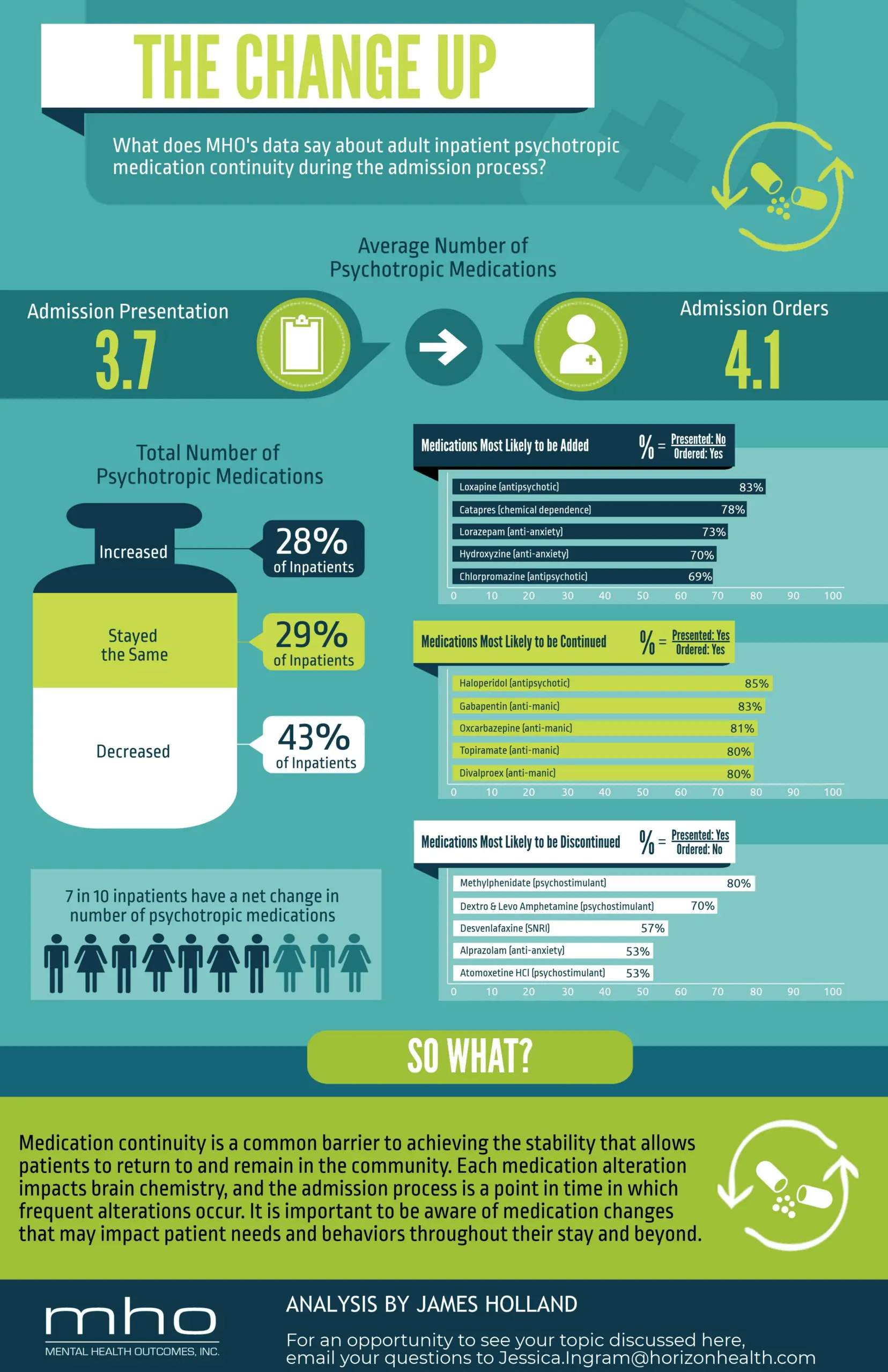
The Change Up
Continuity of psychotropic medications is a key part of achieving and maintaining patient stability, but continuity is a common challenge. In this month’s Analytics in Action, MHO provides insight into how frequently medication switching occurs during the admission process and which medications top the list.
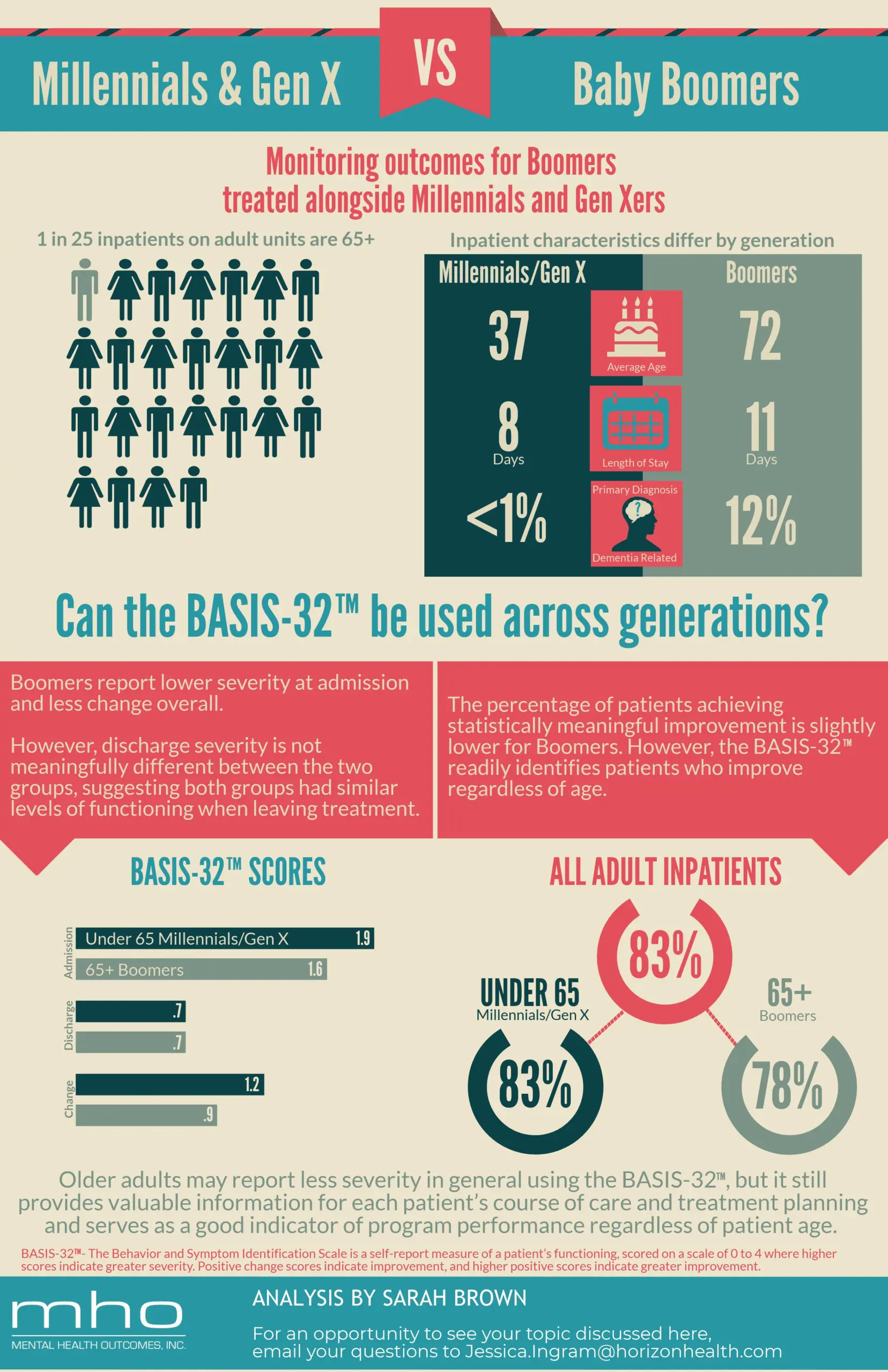
Millennials & Gen X vs. Baby Boomers
Can the Basis32™ successfully monitor outcomes for Boomers that are treated alongside Gen Xers and Millenials?
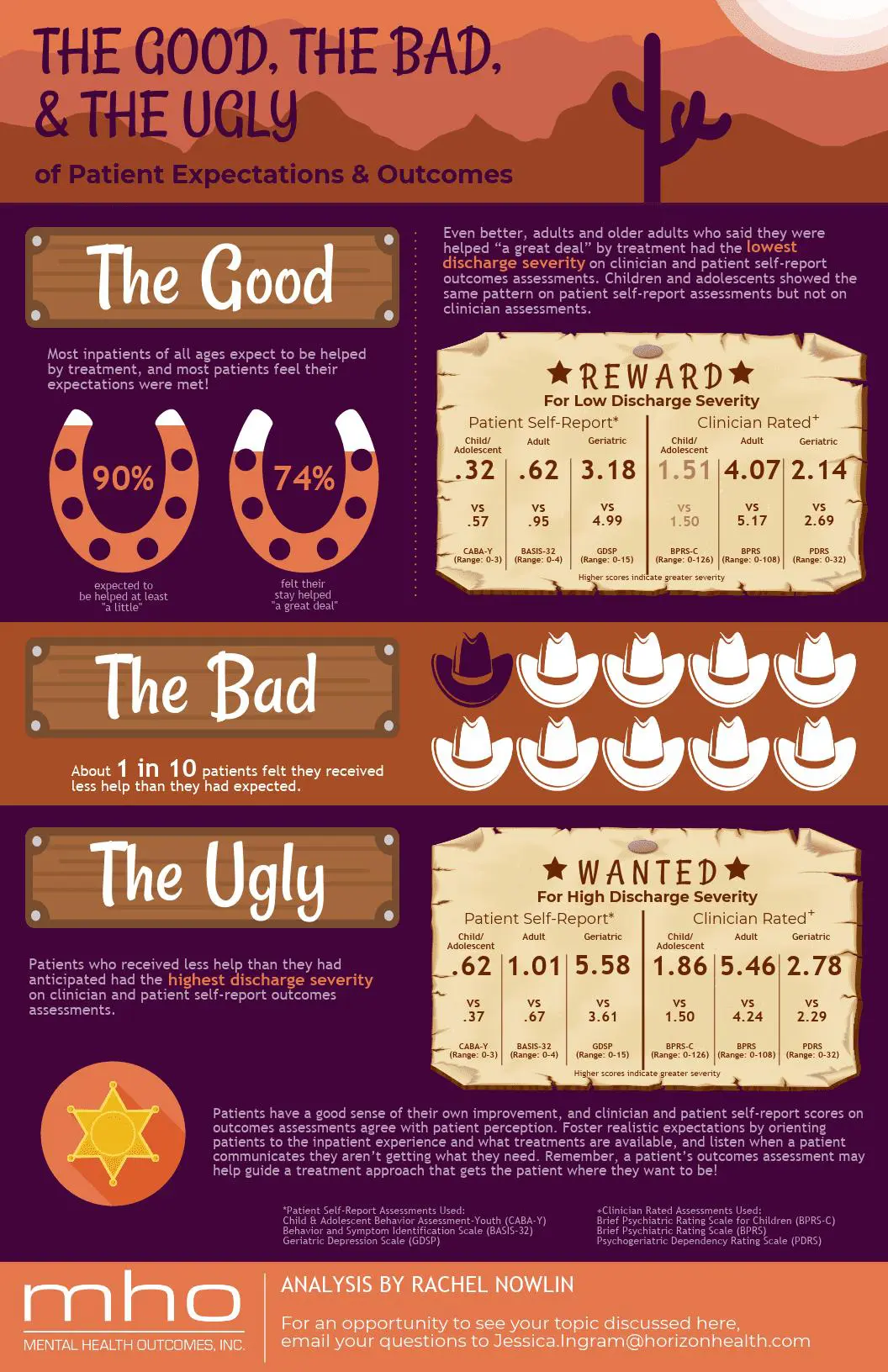
The Good, The Bad, & The Ugly
Most inpatients of all ages expect to be helped by treatment, and most patients feel their expectations were met.
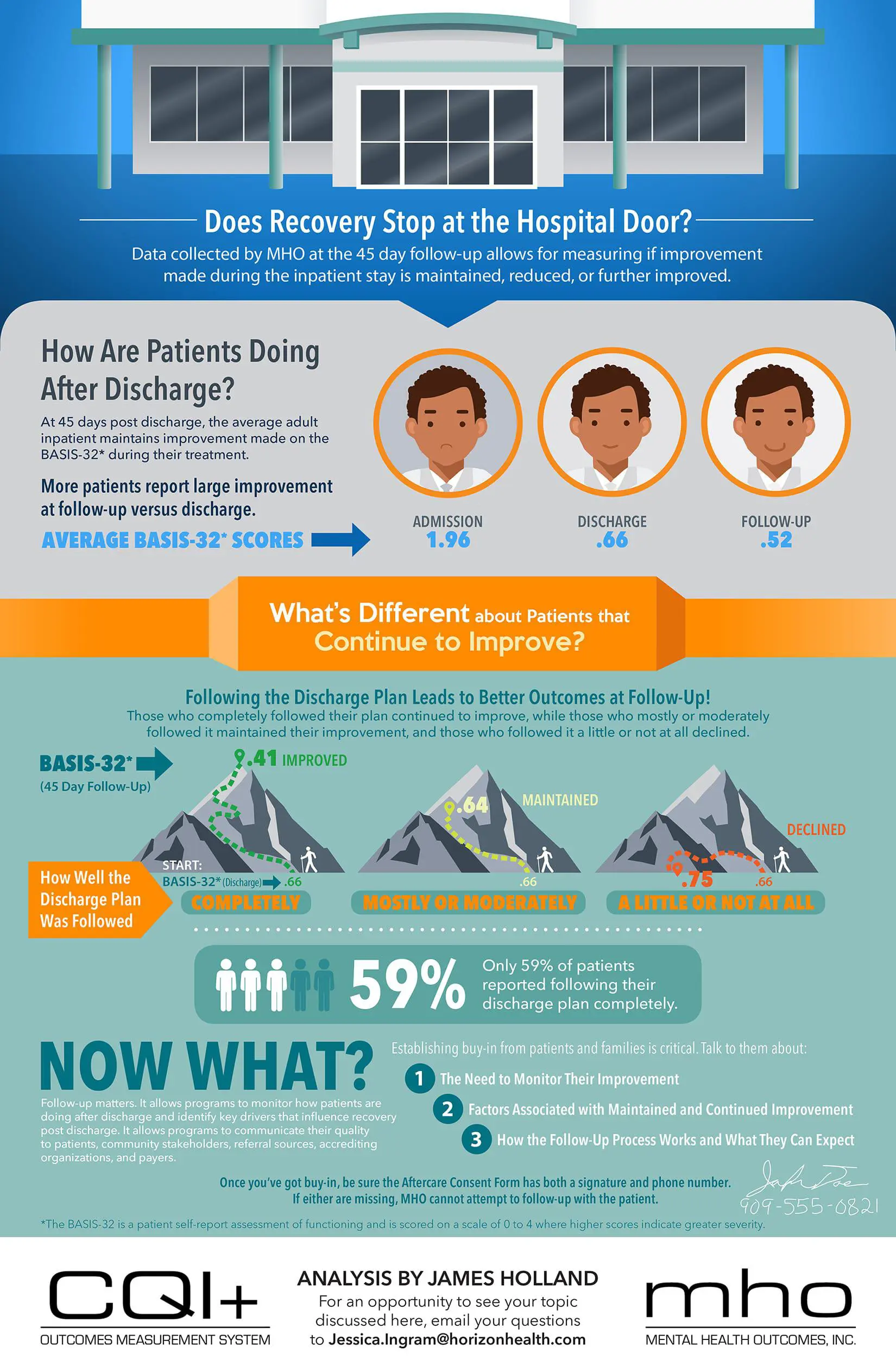
Does Recovery Stop at the Hospital Door?
Data collected by MHO at the 45 day follow-up allows for measuring if improvement made during the inpatient stay is maintained, reduced, or further improved.
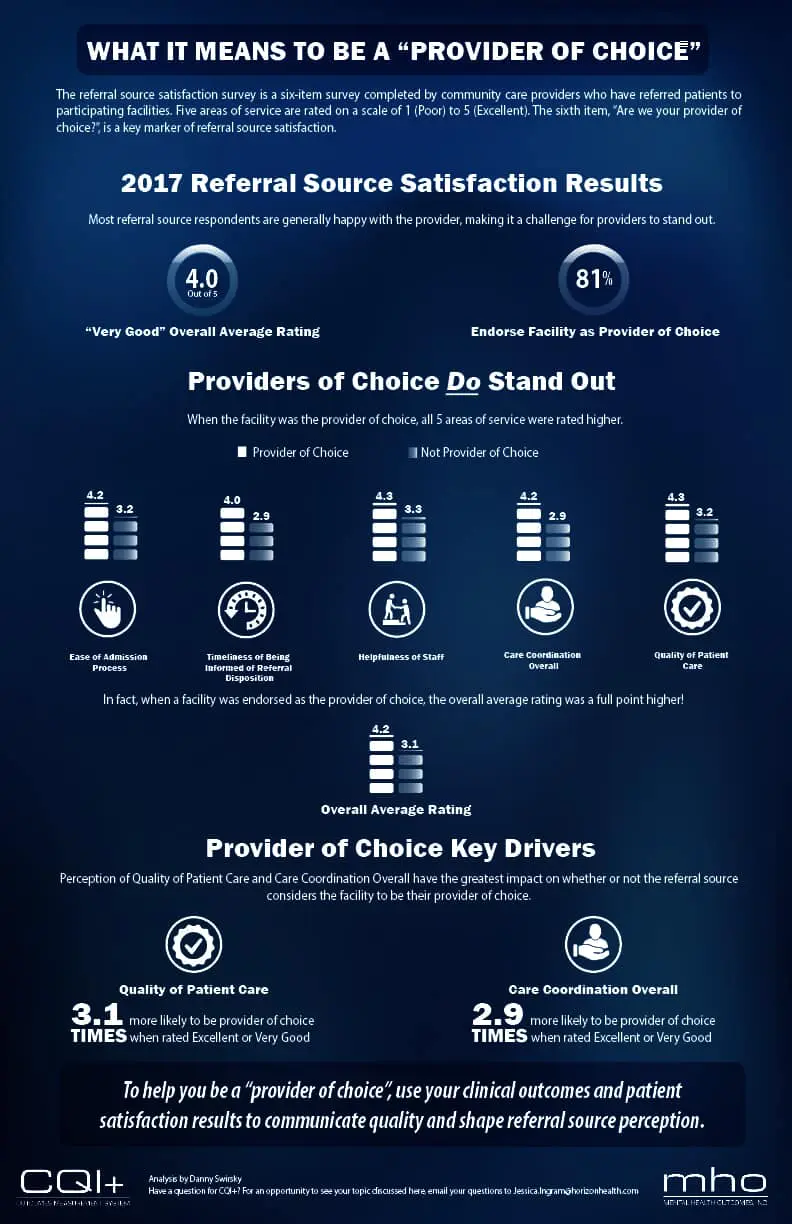
What It Means To Be A “Provider Of Choice”
The referral source satisfaction survey is a six-item survey completed by community care providers who have referred patients to participating facilities. Five areas of service are rated on a scale of 1 (Poor) to 5 (Excellent). The sixth item, “Are we your provider of choice?”, is a key marker of…
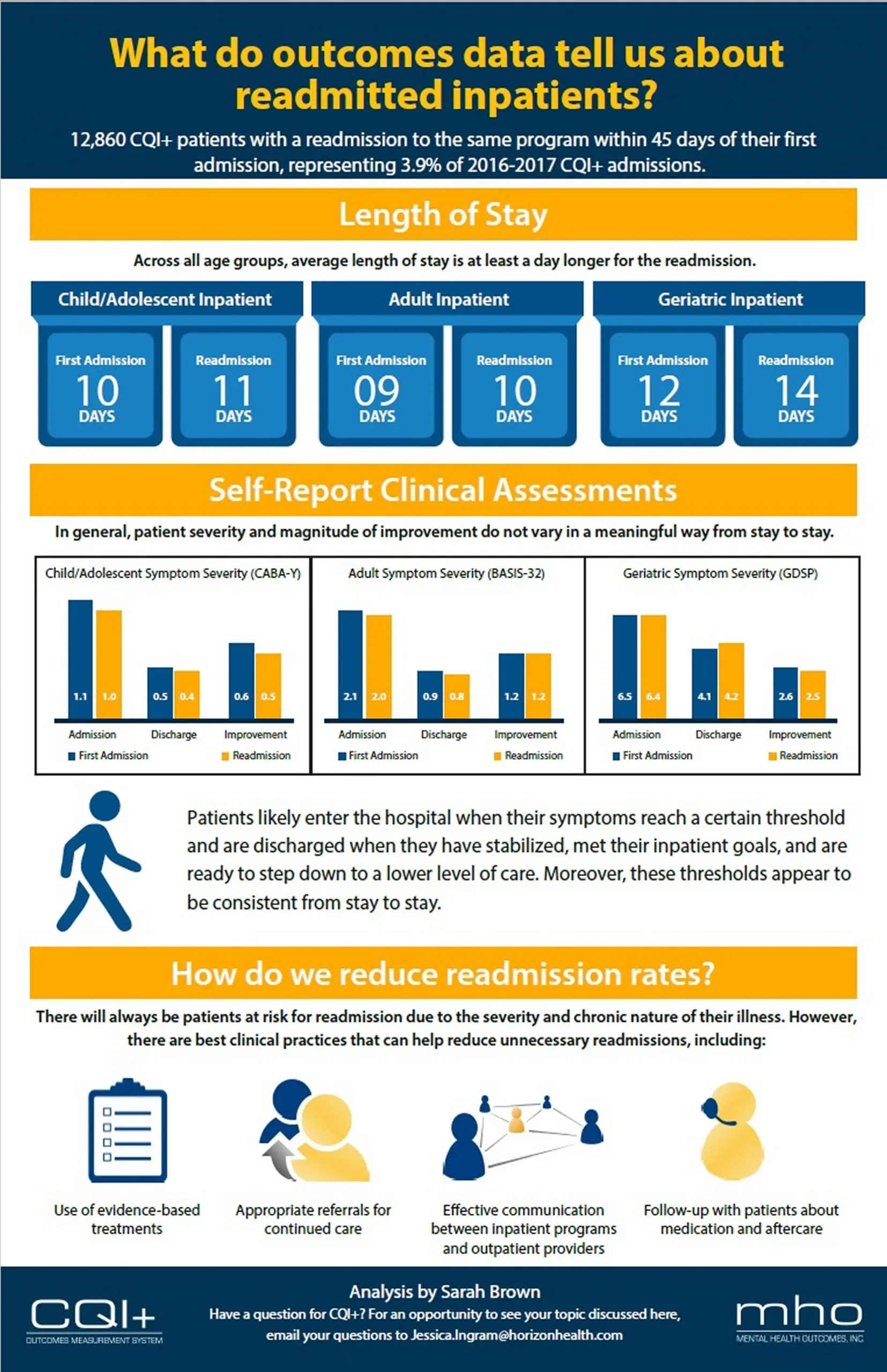
What Do Outcomes Data Tell Us About Readmitted Inpatients?
12,860 CQI+ patients with a readmission to the same program within 45 days of their first admission, representing 3.9% of 2016-2017 CQI+ admissions.
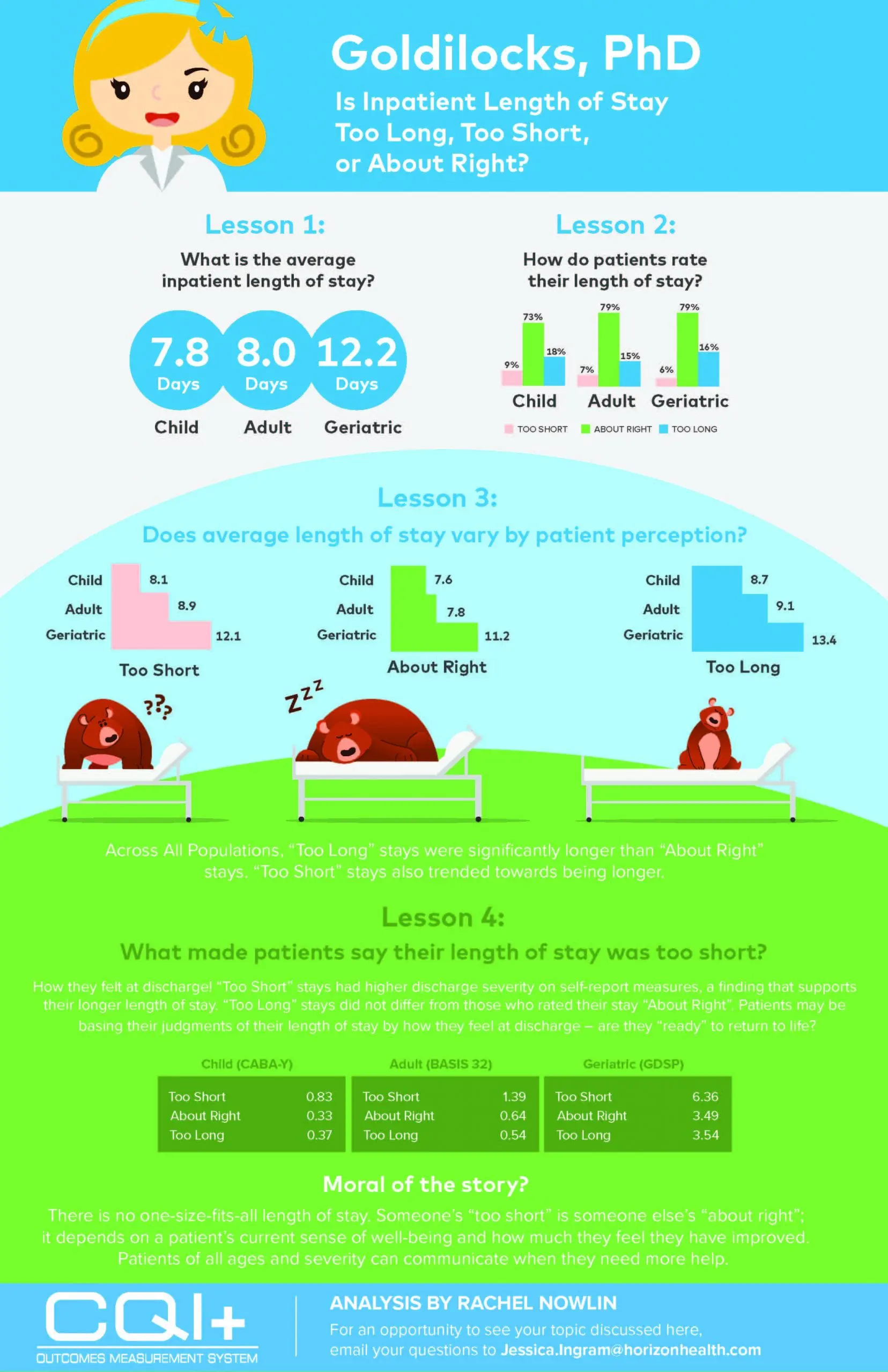
Length of Stay
There is no one-size-fits-all length of stay. Someone’s “too short” is someone else’s “about right”; it depends on a patient’s current sense of well-being and how much they feel they have improved. Patients of all ages and severity can communicate when they need more help.
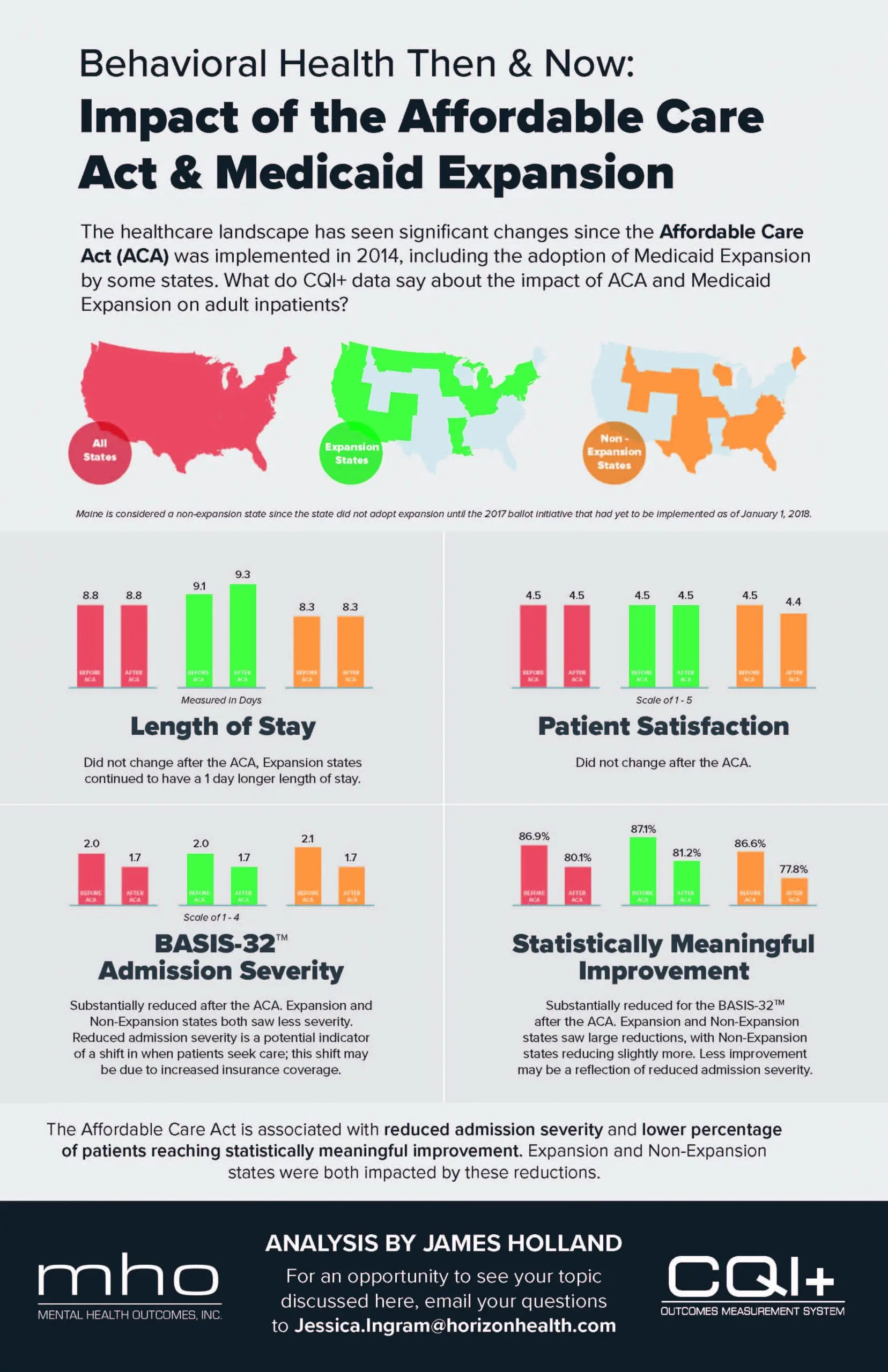
Impact of ACA & Medicaid Expansion
The healthcare landscape has seen significant changes since the Affordable Care Act (ACA) was implemented in 2014, including the adoption of Medicaid Expansion by some states. What do CQI+ data say about the impact of ACA and Medicaid Expansion on adult inpatients?
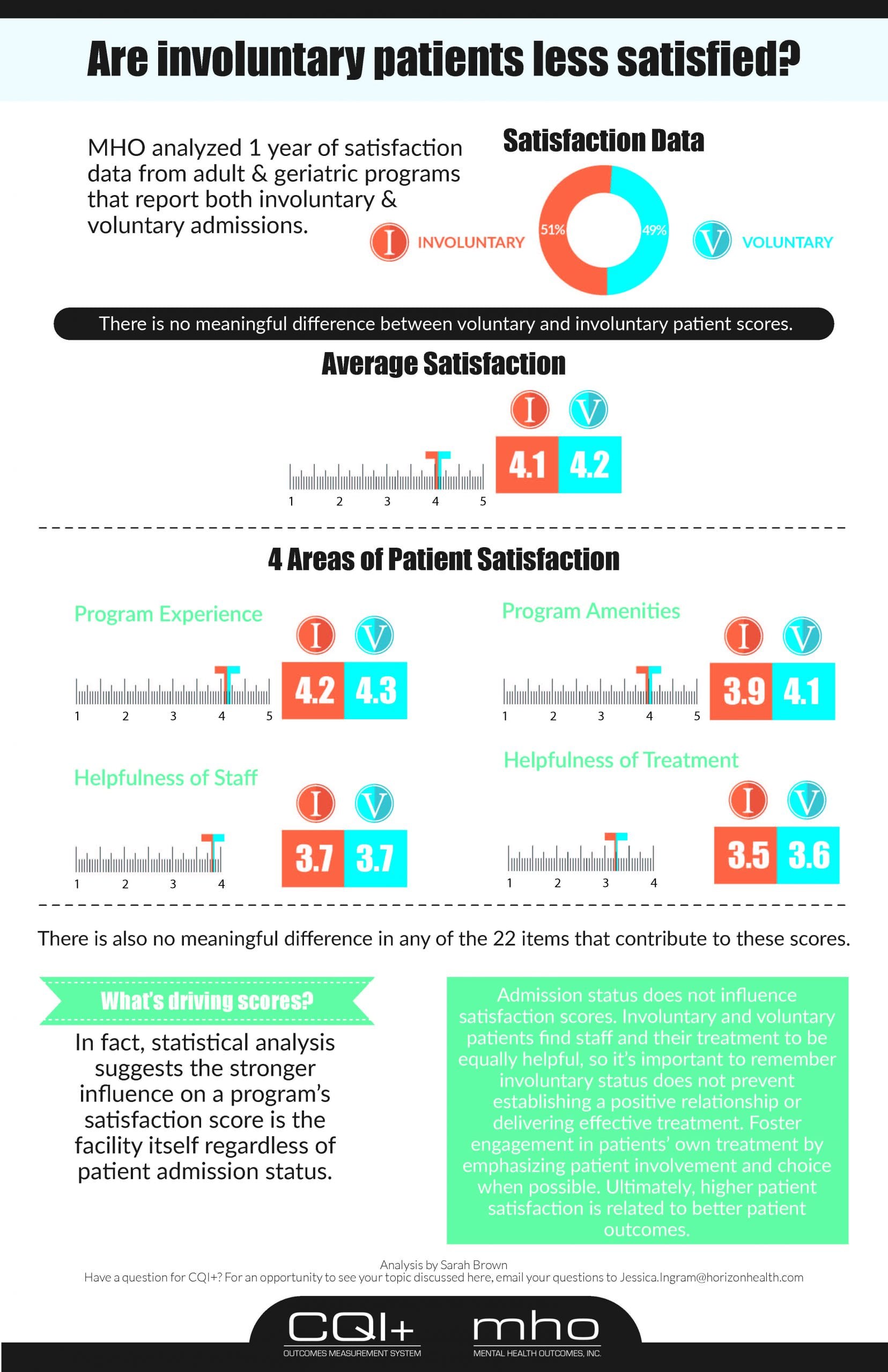
Are Involuntary Patients Less Satisfied?
Admission status does not influence satisfaction scores. Involuntary and voluntary patients find staff and their treatment to be equally helpful, so it’s important to remember involuntary status does not prevent establishing a positive relationship or delivering effective treatment.