
Understanding which patient groups are most likely to receive a suicide attempt or ideation diagnosis can help behavioral health programs target interventions effectively. This analysis aims to replicate key findings and bring renewed awareness to which patient groups are most at risk. We reviewed inpatient data from January 2021 to August 2025 across adolescent, adult, and geriatric programs.
Overall Prevalence
Out of 2,841,906 inpatients, about 1% were diagnosed with a suicide attempt, while a much larger proportion presented with suicidal ideation (62%). Certain groups show higher risk of each diagnosis.
Risk by Age Group
Table 1. Risk by age group
| Age Group | N | % with Suicide Attempt Diagnosis | % with Suicide Ideation Diagnosis | |
| Adolescent | 696,039 | 1.021% | 71% | |
| Adult | 1,979,629 | 0.676% | 61% | |
| Geriatric | 166,238 | 0.890% | 37% |
Key Insights:
- Adolescent inpatients have the highest rate of suicide attempt diagnoses, followed by geriatric patients.
- Suicidal ideation is similar among adolescents and adults but less common in geriatric patients.
Risk by Sex Assigned at Birth
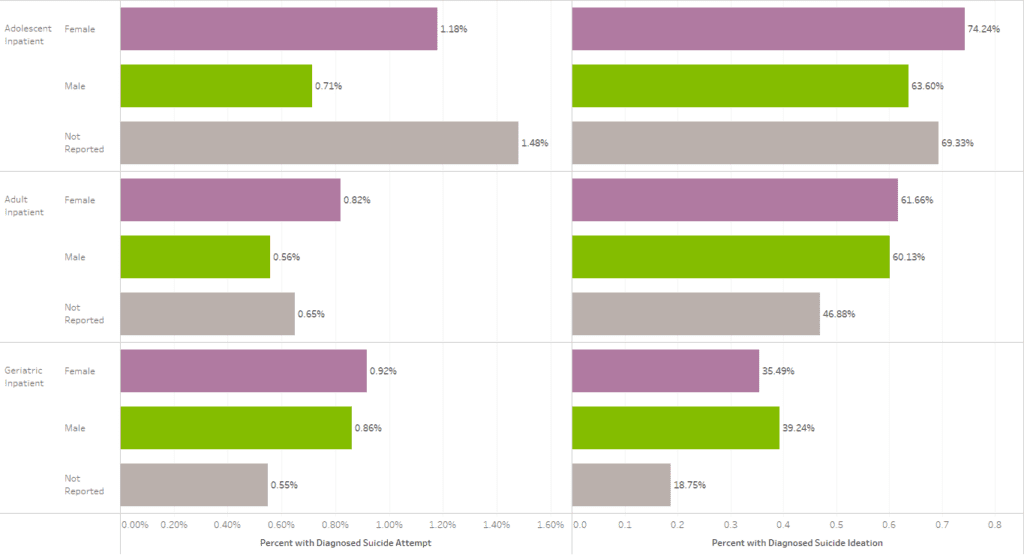
Figure 1. Risk by Sex Assigned at Birth (Non-interactive visual)
Key Insights:
- Females are significantly more likely to have a suicide attempt diagnosis than males. For every 10 female patients diagnosed with a suicidal attempt, approximately 6 male patients receive the same diagnosis. *
- Female adolescents show the highest percentage of suicide attempt diagnoses while adult males have the lowest rate.
- Differences in suicidal ideation by gender are minimal, except among adolescents, where females are more likely to be diagnosed with ideation.
* Women generally report more suicidal thoughts and attempt more frequently, while men are more likely to die from suicide attempts. This pattern likely contributes to the higher proportion of females admitted to behavioral health inpatient programs with suicide attempt diagnoses.¹
Risk by Gender Identity
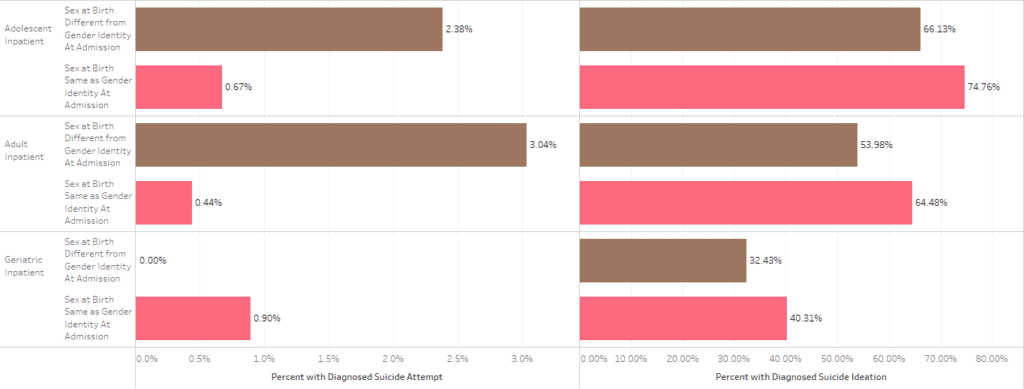
Patients were classified as having a different gender identity if their reported identity did not match their sex assigned at birth or was listed as genderqueer, transgender, or nonconforming, with geriatric “Other” responses excluded due to likely misinterpretation.
Figure 2. Suicide Attempt and Ideation Diagnoses by Gender Identity (Non-interactive visual)
Key Insights:
- Adolescent and adult patients with a different gender identity have 2–3 times higher risk of suicide attempts compared to others.
- Conversely, suicidal ideation was more common among patients whose gender identity matched their sex assigned at birth.
Note: Evidence suggests individuals with a gender identity different from their sex assigned at birth are generally more likely to experience suicidal ideation and attempts. However, underreporting may occur due to stigma associated with both suicidality and gender identity.
Trends
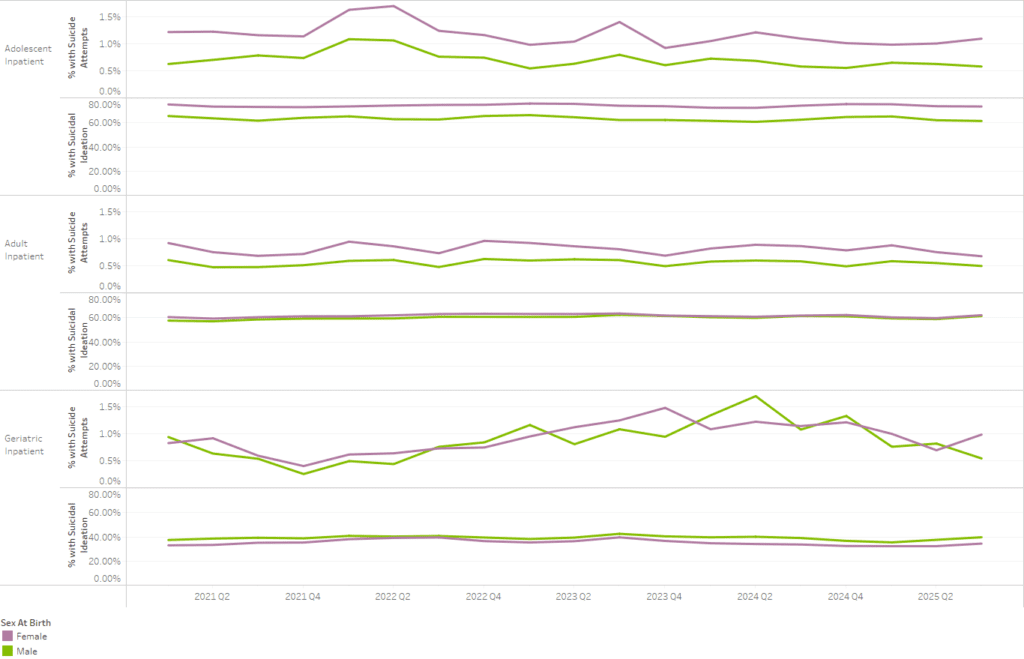
Figure 3. Suicide Attempt Diagnosis Trends by Sex (Non-interactive visual)
Key Insights:
- From 2023 to 2025, suicide attempt diagnoses among older adults increased slightly, approaching the rates seen in adolescent females.
- When we look at gender over time, there’s no clear pattern showing that one gender changed more than the other.
- Suicidal ideation remains relatively stable across all inpatient groups, whereas attempt rates appear to fluctuate more over time.
What This Data Means for Hospitals
These findings highlight the importance of targeted suicide prevention strategies. Hospitals can use data to identify high-risk groups—such as adolescent females and patients whose gender identity differs from their sex assigned at birth—and allocate resources accordingly. This may include enhanced screening protocols, specialized staff training, and tailored therapeutic interventions for these populations. Monitoring trends over time, especially the recent increase among older adults, can help hospitals adjust care plans proactively and ensure that suicide prevention remains a priority across all age groups.
References
¹Hedegaard H, Curtin SC, Warner M. Suicide mortality in the United States, 1999-2017. NCHS Data Brief 2018; 330:1–8.


